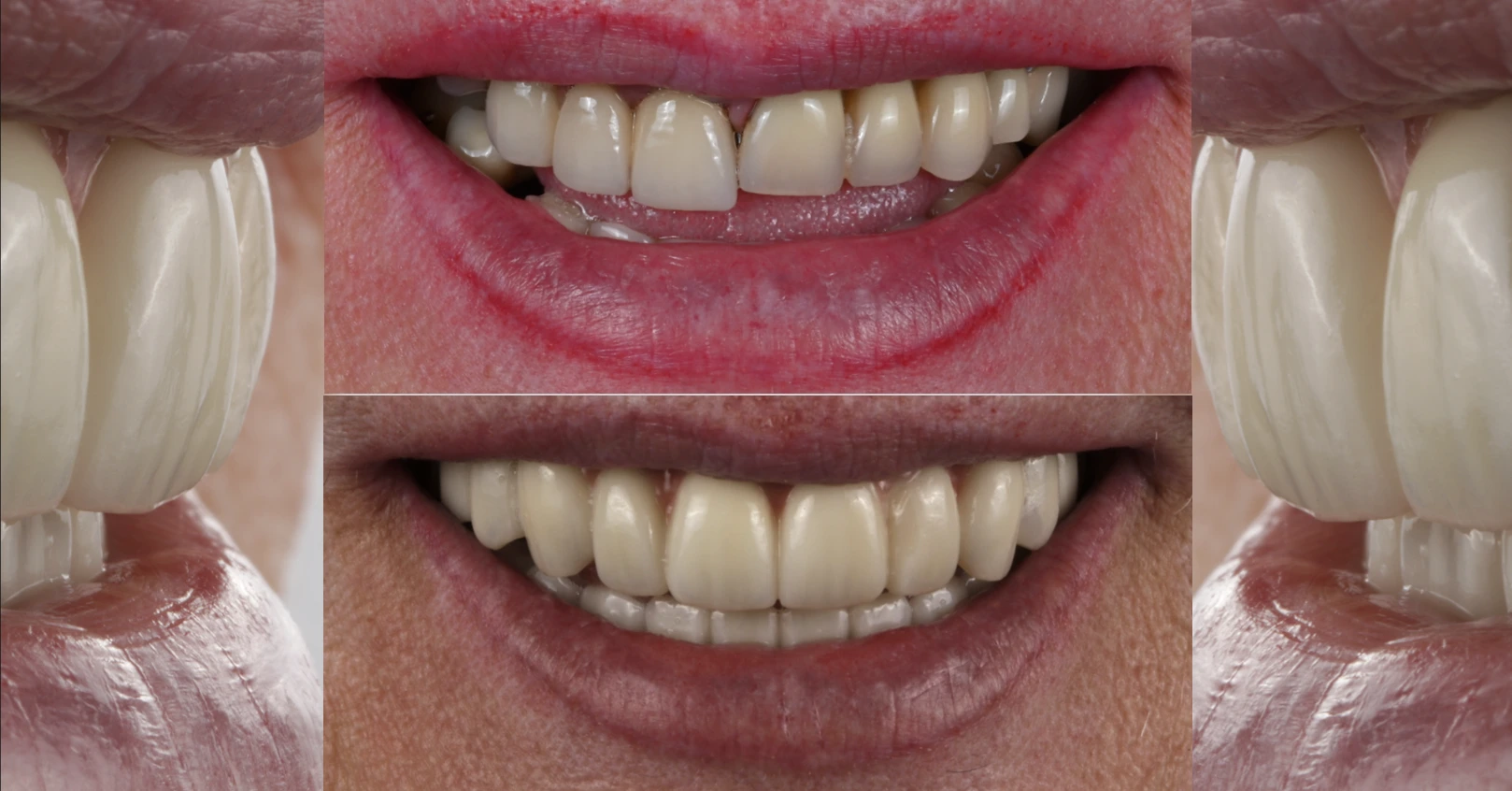
When many teeth are worn, treatment must restore function as well as appearance. Changing how the teeth meet needs careful assessment, especially when a plan proposes numerous crowns or an increase in bite height.
Understanding a worn bite
Short-looking teeth do not automatically mean that the whole bite has collapsed. Teeth and supporting tissues can adapt as wear develops. The dentist should investigate grinding, acidic exposure, reflux symptoms and other possible causes, while assessing jaw comfort, tooth position and available space.
Raising the bite by five or six millimetres is not a standard prescription. The amount, measurement location and method need individual justification. Likewise, a proposal for 23 crowns needs a tooth-by-tooth explanation. Additive composite or partial-coverage restorations may conserve more tooth tissue in suitable cases.
A sequence that can be evaluated
Treatment commonly begins with examination, photographs, scans or impressions and a diagnosis. Decay, infection and gum disease are addressed first. A diagnostic design and, when appropriate, provisional or trial restorations help assess appearance, speech, comfort and contacts before definitive work.
Trials are useful, but they do not guarantee that no later adjustment will be needed. If implants or bone grafts are part of the plan, healing can lengthen the overall timeline considerably. A staged plan is more useful than promising a full reconstruction in a fixed number of days.
Adjustments after treatment
Some patients need adjustments as they adapt to new restorations. There is no reliable single percentage or standard number of appointments that describes every full-mouth case. A contact that feels too high, pain when biting, difficulty chewing or continuing jaw discomfort should be reviewed rather than simply tolerated.
The clinician must distinguish an adjustment issue from a tooth, gum, root or component problem. Repeated grinding of restorations without reassessing the cause is not a complete plan.
Protecting the result
Full-mouth rehabilitation requires continuing dental reviews, hygiene and checks of restorations and the bite. A protective splint may be recommended for grinding; it can protect restorations but does not necessarily stop bruxism. The interval for visits depends on individual risk.
Request a written quote covering the proposed teeth, provisional phase, materials, implants if needed and review arrangements. At CHC Clínica Dental Barcelona, ask how the proposed bite will be assessed, what alternatives preserve tooth tissue and how concerns will be managed after treatment.
Explore our information about full-mouth rehabilitation in Barcelona.
Sources and further reading
https://www.gotoapro.org/full-mouth-reconstruction/


