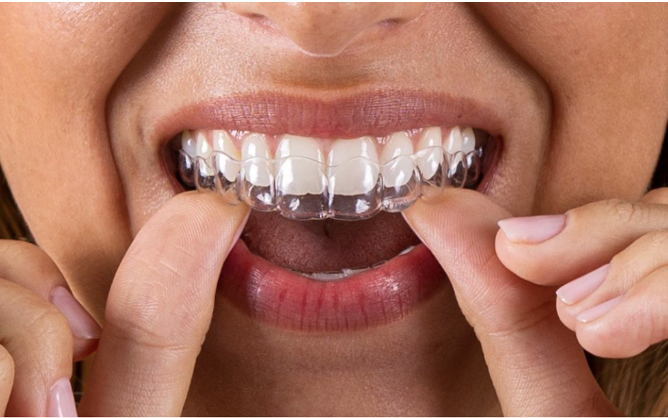
More and more patients ask the same question: “Do clear aligners really work, or is it just marketing?” It is a fair question. This article explains what the treatment involves, how it works, the different options, who it may suit and what to expect from the process.
What is invisible orthodontic treatment?
Invisible orthodontic treatment corrects tooth position and the bite discreetly, without traditional metal braces. Instead of wires and brackets attached to the teeth, it uses custom-made transparent trays called aligners, which fit over the teeth and gradually move them towards their planned positions.
Aligners and braces may pursue similar goals, but they are not interchangeable in every case. The appropriate option depends on the movements needed, the bite, the health of teeth and gums and patient cooperation.
How do clear aligners work?
The principle is the same as in other orthodontic treatments: applying controlled, sustained pressure to move teeth gradually towards their intended positions.
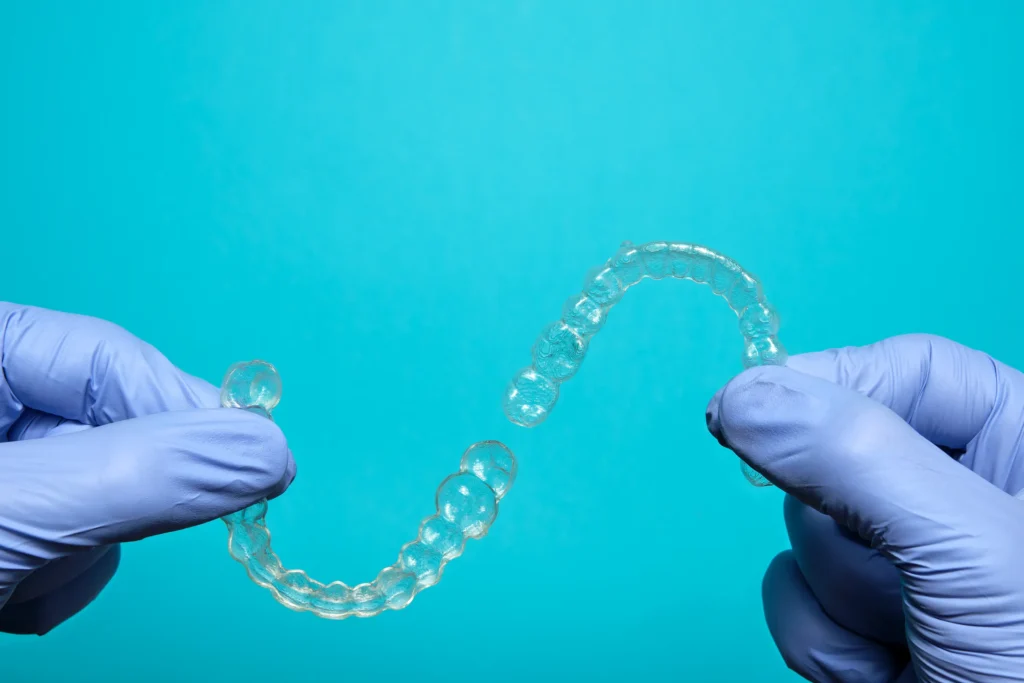
The mechanism differs. Rather than a metal archwire applying continuous pressure, aligners are a sequence of clear plastic trays, each designed to produce a specific tooth movement. When you finish with one tray, you move to the next, which continues where the previous one left off.
Treatment is planned with a scanner and 3D design software. The simulation helps explain the planned movements and estimate the aligner sequence, but it does not guarantee an exact outcome or replace clinical follow-up.
Each aligner is worn for 7 to 14 days, approximately 20–22 hours a day, and removed for eating, drinking anything other than plain cool or room-temperature water, and cleaning the teeth. Follow the wear and replacement schedule prescribed by your orthodontist.
Types of discreet orthodontic treatment
When people refer to “invisible orthodontics”, they do not always mean the same thing. Several options exist, and they do not all work in the same way:
Clear aligners
These are the most popular option and what most patients mean by invisible orthodontic treatment. They are removable, transparent trays made to measure using a digital scan. They are barely visible even at close range and can fit into everyday life comfortably.
At CHC Clínica Dental, we use Angel Aligners. Suitability does not depend only on the brand or number of trays: first we assess which movements the patient needs and whether this system is appropriate for them.
Ceramic braces
These resemble traditional braces but are made from ceramic in a colour similar to tooth enamel. They remain fixed and cannot be removed, but are much less visible than metal braces. They need regular review and adjustment appointments; the interval depends on the appliance, treatment stage and progress.
Sapphire braces
These are similar to ceramic braces but made from transparent sapphire crystal. They are among the most discreet fixed-brace options. They also require periodic adjustments.
Who may be suitable for clear aligners?
Aligners can correct a wide range of dental problems. Some common examples include:
Crowding: when teeth do not have enough space and overlap or become crooked.
Diastemas: gaps between teeth, particularly between the upper central incisors.
Deep overbite: when the upper teeth overlap the lower teeth too much when the mouth closes.
Open bite: when the upper and lower front teeth do not meet when the mouth closes.
Crossbite: when one or more upper teeth sit inside the lower teeth on biting.
Mild proclination: teeth that tilt outwards more than they should.
Very complex cases, such as severe skeletal discrepancies, multiple extractions or major bite corrections, may require braces or even orthognathic surgery. An initial assessment by the orthodontist is therefore essential—not to discourage you, but to ensure that the proposed treatment is appropriate for your individual case.
Advantages of clear aligners compared with braces
Neither option is better in every situation. Each case has different needs. When both options are suitable, however, aligners offer some clear advantages:
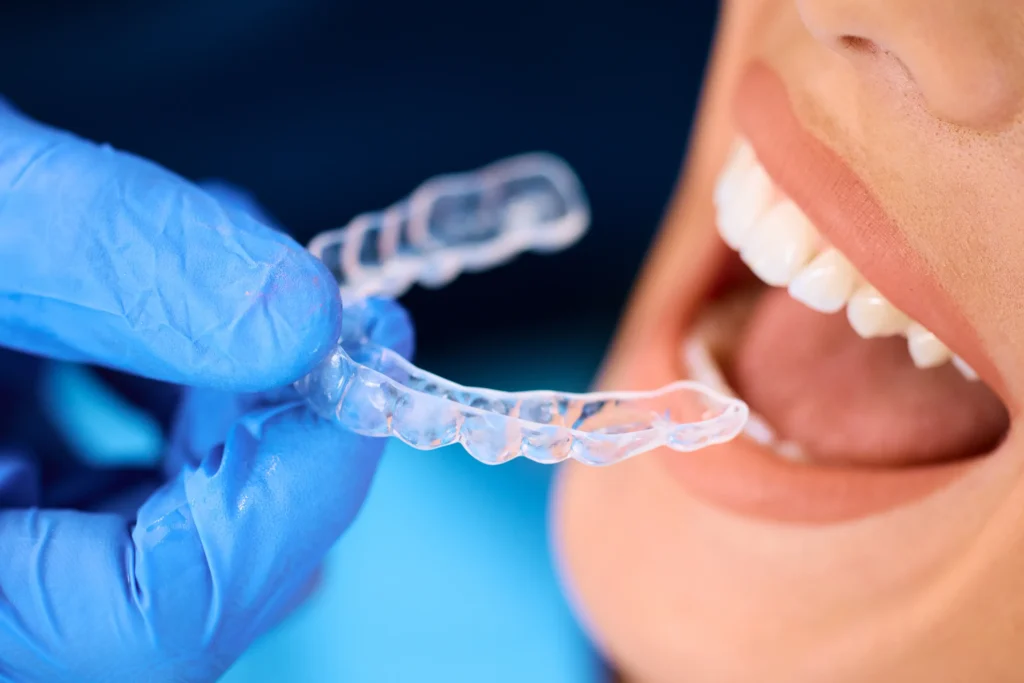
They are barely visible. Even at close range, aligners can be difficult to notice. This can make a difference for adults in professional settings or people who prefer their orthodontic treatment to be discreet.
They can be removed for meals. Taking aligners out to eat makes it easier to maintain usual eating habits. Afterwards, it is important to clean the teeth and put them back in as instructed by the orthodontist.
Oral hygiene may be simpler. Removing the trays allows brushing and interdental cleaning without a fixed appliance in the way. The aligners still need cleaning and regular reviews remain necessary: wearing them does not remove the risk of decay or gum inflammation.
Scheduled follow-up. Aligners are not adjusted in the same way as braces, but they still require check-ups. Frequency depends on the treatment stage and clinical response; longer intervals do not mean doing without follow-up.
No metal wires or brackets. Without these components, some rubbing may be reduced, although aligner edges or attachments can still cause occasional discomfort that should be checked if it persists.
A clearer understanding of the plan. The 3D simulation helps visualise the intended sequence and discuss goals and limitations before starting. The actual outcome may vary with the biological response and how the aligners are worn.
Are there any disadvantages?
Yes, and it is better to know about them from the outset:
They require discipline. Treatment success depends substantially on wearing the aligners for the recommended time, usually 20–22 hours a day. Unlike fixed braces, aligners can be removed. That freedom brings responsibility: wearing them for fewer hours than required can delay treatment.
They are not suitable for every case. Very severe malocclusions or particularly complex movements may be beyond the scope of aligners and require braces or surgery. The orthodontist determines the most appropriate approach for each situation.
They must be removed for food and certain drinks. Afterwards, you need to clean your teeth and put them back in. This requires organisation, especially away from home. Attachments or elastics may also be used for particular movements.
Daily wear and care
- Wear the aligners for the number of hours prescribed by your orthodontist.
- Remove them for meals and follow the advice about drinks.
- Brush and clean between the teeth before putting them back in.
- Clean the aligners using the recommended method; very hot water can distort them.
- Keep them in their case and contact the clinic if they are lost, broken or no longer fit.
Does clear aligner treatment hurt?
Aligners can cause pressure or sensitivity, especially when starting a new stage. Experiences vary, and it would not be correct to promise treatment without discomfort.
Temporary sensitivity can be part of the process, but severe pain, a sore that does not improve or an aligner that does not fit should be reported to the clinic so the cause can be checked.
How long does treatment take?
Duration depends on the complexity of each case. As a general guide:
- Mild cases, such as minor crowding or small gaps: 4 to 8 months
- Moderate cases, such as more noticeable crowding or minor bite corrections: 8 to 14 months
- Complex cases: 14 to 24 months
To find out how long your own treatment might take, the reliable approach is an in-person orthodontic assessment.
How much does clear aligner treatment cost?
The estimate depends on the diagnosis, complexity, expected duration, resources required and what follow-up includes. Comparing a price alone without considering these conditions can be misleading.
After the assessment, we explain the estimate and what it includes: planning, aligners, reviews, possible refinements and retention, according to the plan proposed for each patient.
Frequently asked questions about clear aligners
From what age can aligners be used? There is no single age. The decision depends on the dentition, growth, the problem to be corrected and the ability to follow the wear schedule. In younger patients, interceptive treatment or another option may also need consideration.
Can pronunciation change? A mild, temporary change may occur during adaptation. The duration varies; if it persists or makes speaking difficult, the fit should be checked.
What are attachments and why might I need them? These are small composite shapes bonded to selected teeth to help the aligner produce specific movements. They may be visible close up and are removed after that phase. Not every case needs the same attachments.
What if I lose an aligner? Contact the clinic first. Depending on your stage of treatment, the orthodontist will advise whether to return to the previous tray or move to the next. Several days without an aligner can undo some achieved movement, so do not leave it unaddressed.
Will I need retainers afterwards? Retention is part of treatment because teeth can move again. Your orthodontist will prescribe the retainer type, wear schedule and necessary reviews; these instructions may change over time.
Would you like to know whether clear aligners suit you?
At CHC Clínica Dental in Sants-Montjuïc, Barcelona, we assess the bite, tooth and gum health and the movements required. We then explain the alternatives, limitations, estimated duration and costs.
Request an assessment to find out whether aligners meet your needs.