Explore six clinical cases from CHC Clínica Dental. Each plan combines oral health, chewing function and the appearance of the smile. These photographs show individual cases; your diagnosis, treatment and outcome may differ.
Health comes first
Across these cases, the treatment sequence begins with diagnosis and control of active disease. Gum inflammation, periodontitis and decay are treated where needed. Reassessment checks tissue stability before rehabilitation proceeds. Temporary restorations allow the team to check the bite, chewing, speech and appearance before producing the definitive restorations.
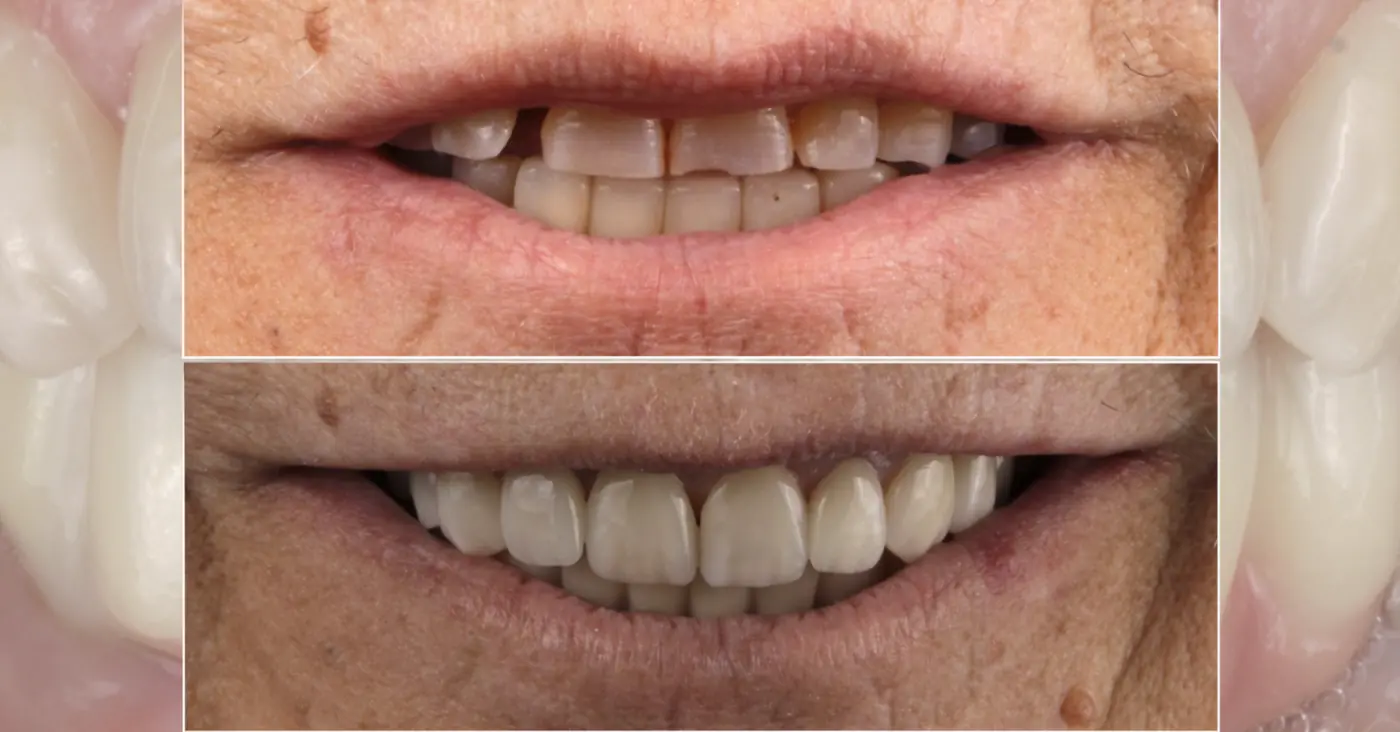
Before: top. After: bottom.
Case 01
Chewing and smiling again
The patient had periodontitis around a lower bridge and missing back teeth in both arches.
The lower arch was restored with a fixed prosthesis on six implants, using immediate loading. In the upper arch, a posterior bridge was combined with anterior veneers.
Treatment stages
The initial assessment considered gum health, the existing lower bridge and the missing posterior teeth together.
Periodontal treatment and any other necessary disease-control treatment came before rehabilitation; the tissues were then reassessed.
The lower immediate-loading restoration and upper temporary restorations were used to test how the arches worked together.
The bite, chewing, speech, tooth proportions and relationship with the lips were checked and adjusted with the temporaries.
The definitive lower implant-supported restoration, upper posterior bridge and anterior veneers followed the design validated during this trial phase.
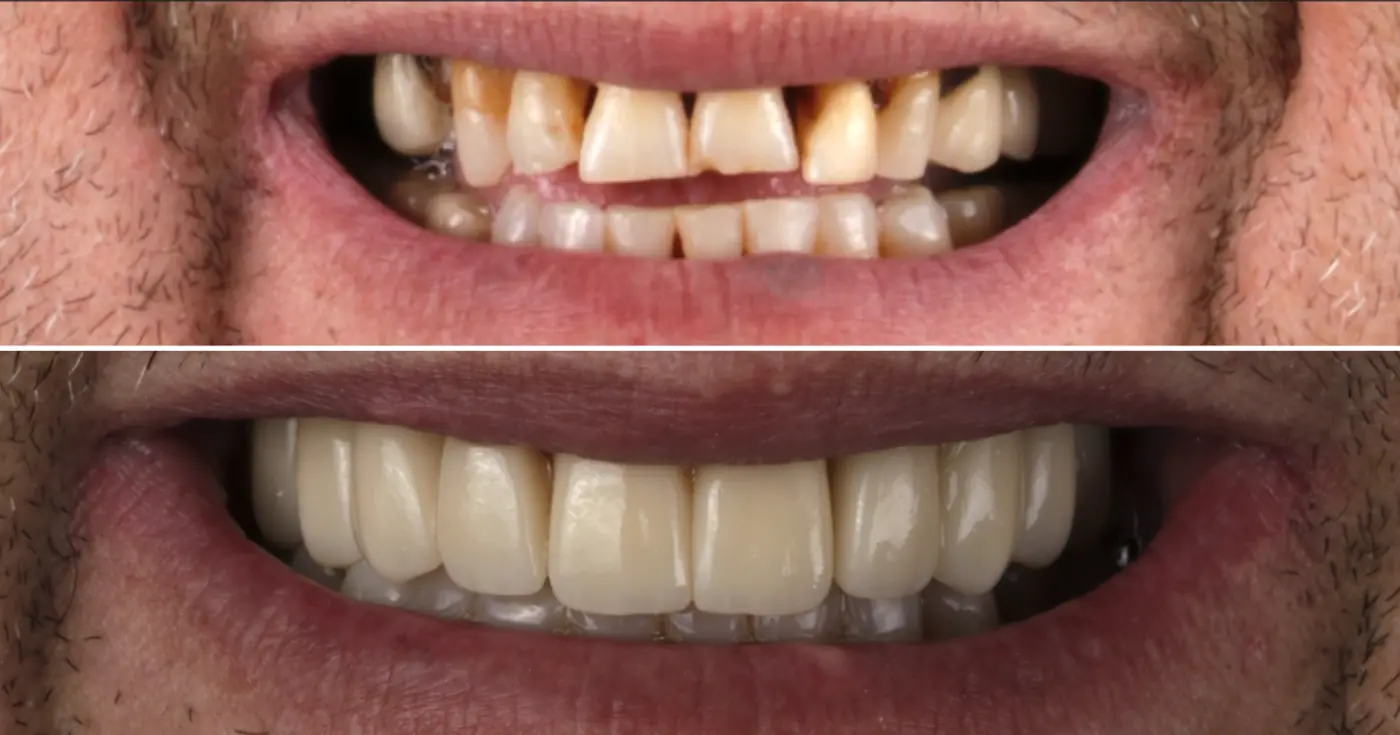
Before: top. After: bottom.
Case 02
Replacing missing back teeth
Periodontitis and missing posterior teeth had reduced support in both arches.
Implant-supported bridges replaced the posterior teeth. Upper crowns and anterior composite veneers completed the rehabilitation.
Treatment stages
The plan coordinated replacement of the missing back teeth with the upper crowns and anterior composite restorations.
Gum disease, inflammation and any decay or other active problems were treated before restoring chewing support.
Reassessment confirmed that the gums and other treated areas were stable and that the restorative plan remained appropriate.
Temporary restorations on teeth and implants were used to adjust the bite, tooth shape and proportions.
Chewing support, the relationship between the arches, speech and appearance were checked before the definitive bridges, crowns and composite restorations were completed.
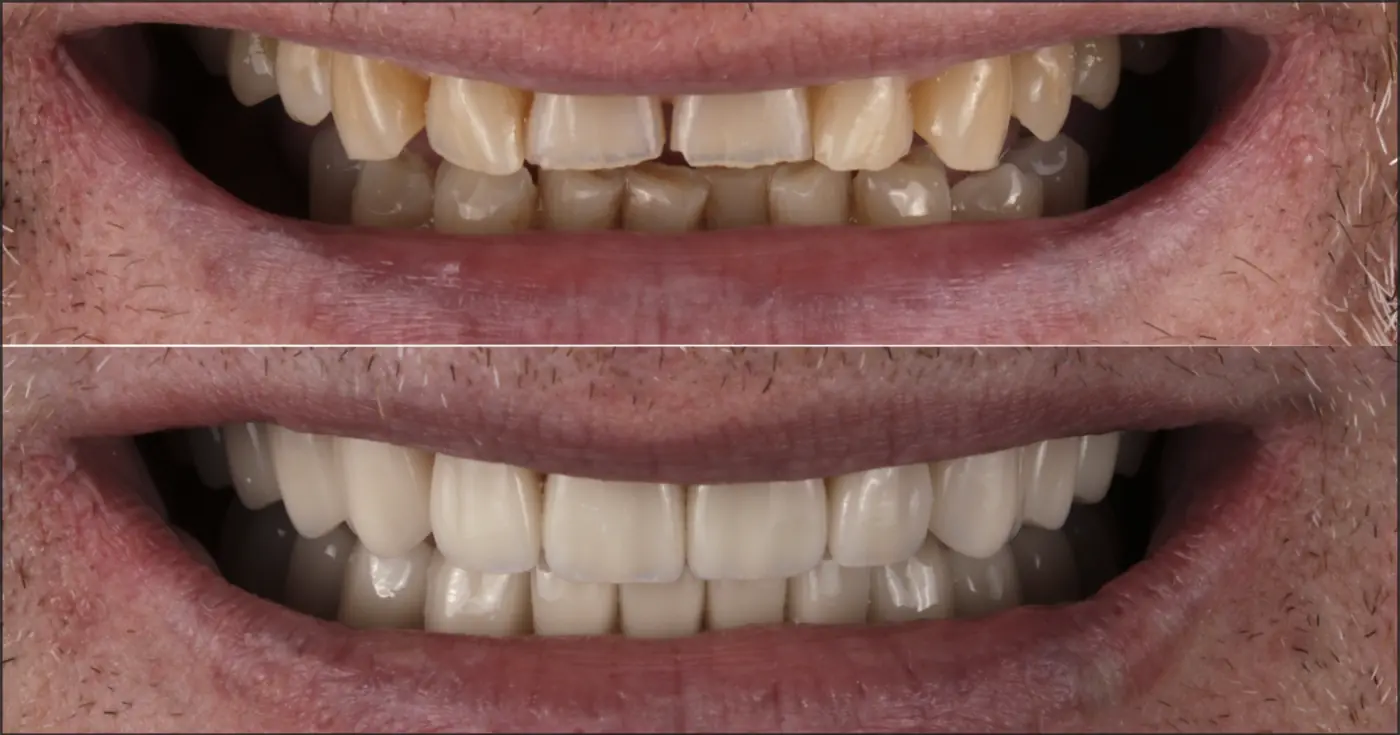
Before: top. After: bottom.
Case 03
Aligning teeth before veneers
The original tooth positions did not allow the minimal preparation sought for the veneers.
Clear aligners improved tooth position before 12 upper and 12 lower veneers were made with conservative tooth preparation.
Treatment stages
Planning assessed tooth position and the space needed for 24 veneers while aiming to preserve tooth structure.
Teeth and gums were checked, any active disease was treated, and stability was reassessed before orthodontic and restorative care.
Aligners moved the teeth into a more favourable position; the veneer plan was then adjusted to the achieved alignment.
Conservative preparation and temporary veneers allowed the shape, proportions and relationship between both arches to be tried in the mouth.
The bite, chewing, speech and smile were checked with the temporaries before the 12 upper and 12 lower definitive veneers were made.
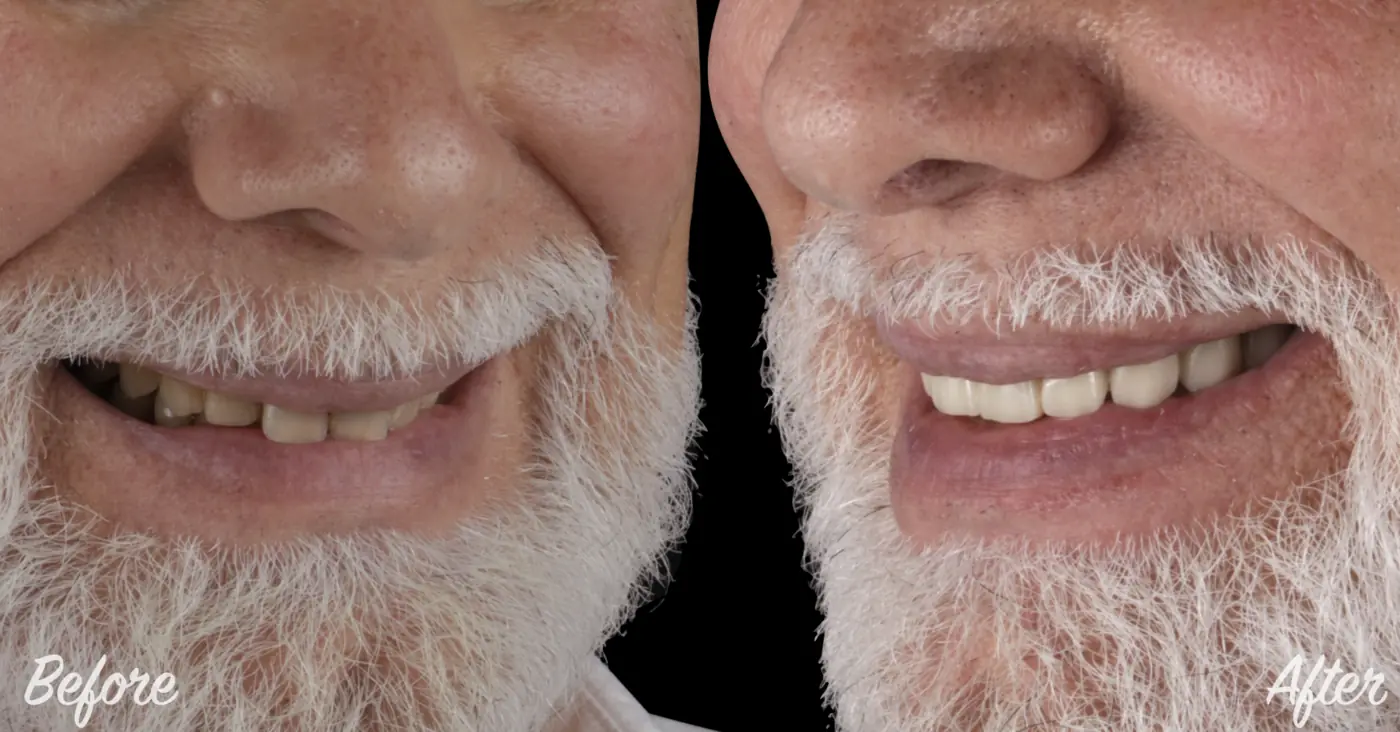
Before: left. After: right.
Case 04
Treating decay before renewing restorations
The patient had old crowns in both arches, inflamed gums and decay beneath several restorations.
The gums and decay were treated, crown-lengthening procedures were performed, and the restorations were renewed with 14 upper and 14 lower zirconia crowns.
Treatment stages
The assessment identified the old restorations, underlying decay and gum inflammation, prioritising health before replacing the crowns.
The necessary old restorations were removed, decay and periodontal disease were treated, and the planned crown-lengthening procedures were carried out.
Healing and gum response were reassessed before the restorative phase.
Temporary crowns tested tooth shape, proportions, gum relationships and the bite against the opposite arch.
Chewing, speech and appearance were checked and adjusted before the 28 definitive zirconia crowns were completed.
Before: left. After: right.
Case 05
An aligned, balanced smile
The position of the upper teeth needed improvement before restorative treatment.
Clear aligners improved tooth position, followed by ten upper veneers to complete the shape and proportions of the smile.
Treatment stages
The plan considered upper tooth position, proportions and the relationship with the smile.
Teeth and gums were assessed, any active disease was treated, and stability was checked before continuing.
Aligners improved tooth position; the design for the ten upper veneers was reviewed after alignment.
Temporary veneers tested tooth length, shape and the relationship with the lips and lower teeth.
The bite, function, speech and appearance were confirmed with the temporaries before the ten definitive upper veneers were made.
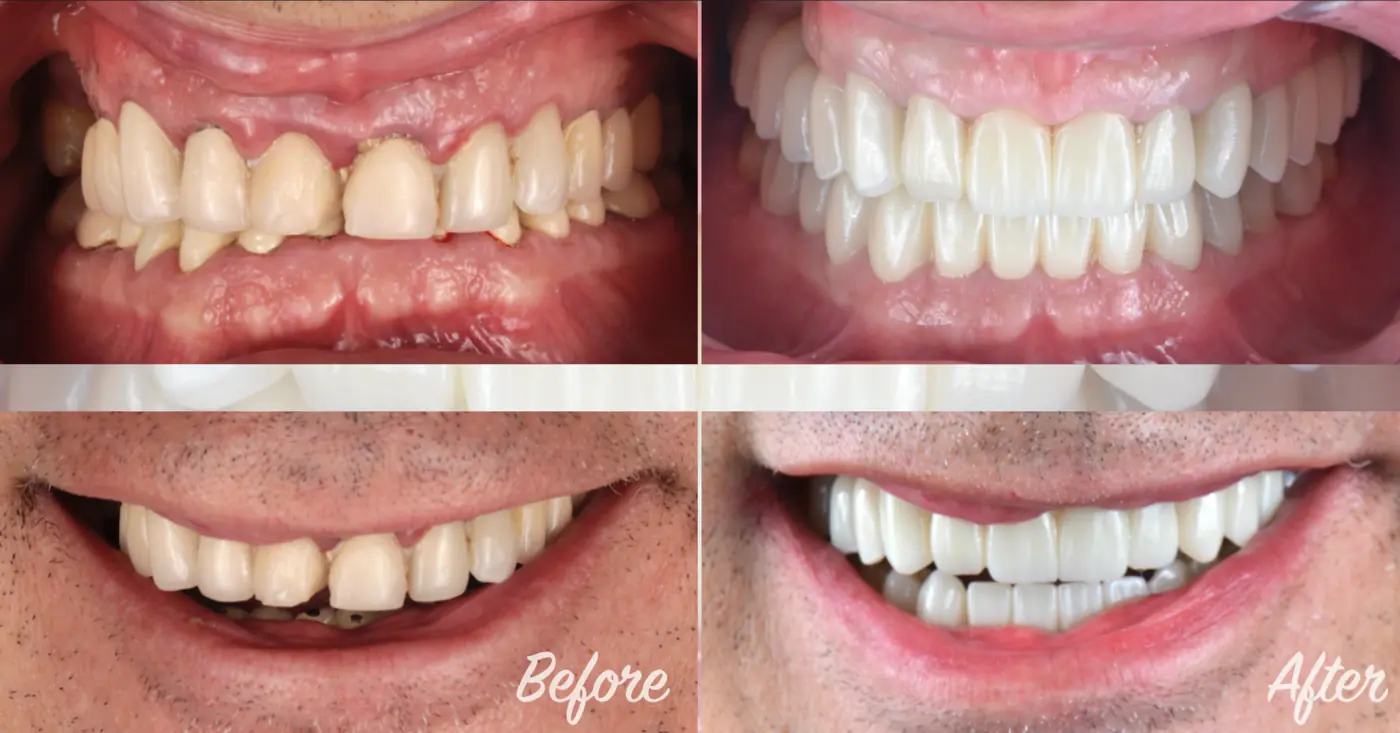
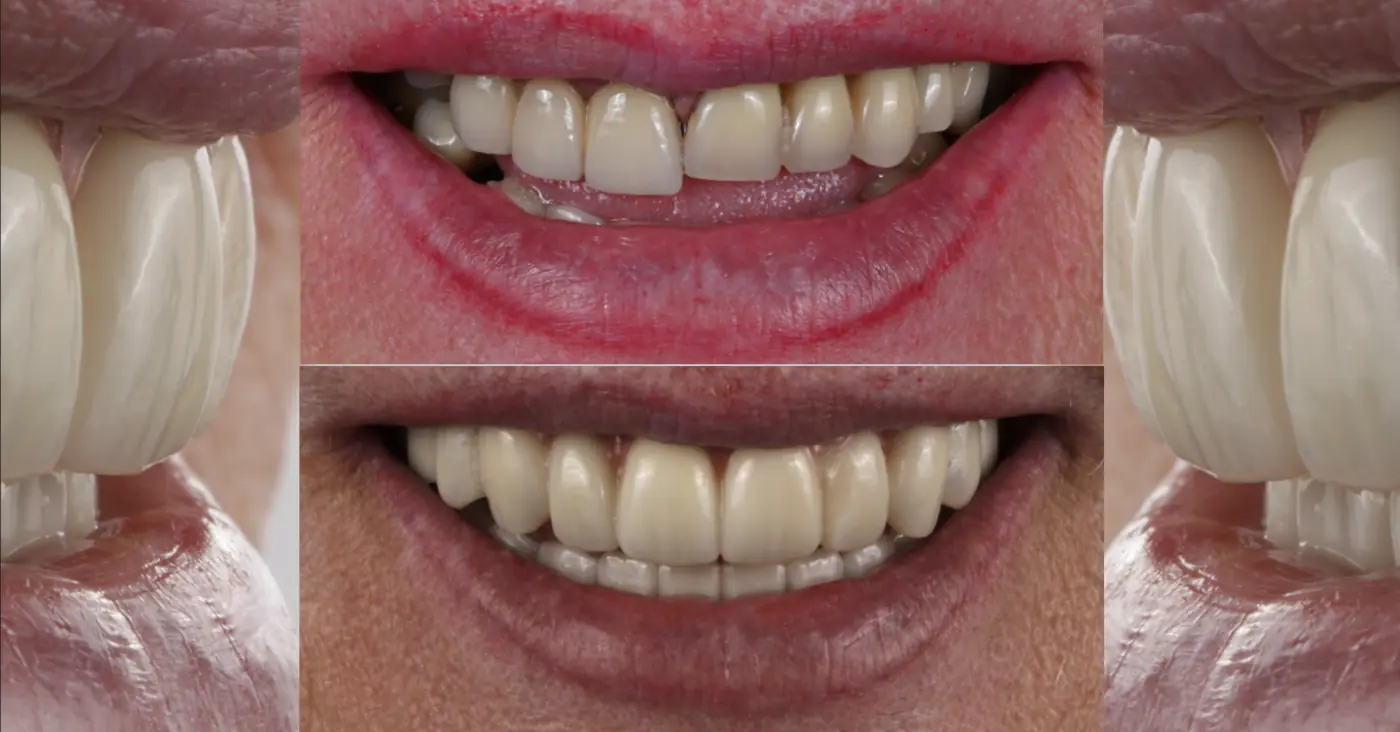
Central comparison: before above, after below; additional views at the sides.
Six implants were placed in each arch with immediate loading. Two definitive fixed zirconia bridges replaced the teeth and the necessary gum volume.
Treatment stages
Planning considered both arches together: six upper and six lower implants, immediate-loading temporary restorations and a definitive zirconia rehabilitation.
Any active periodontal disease, inflammation, decay or other identified problems were addressed, followed by reassessment.
Fixed immediate-loading temporary prostheses were used to test the relationship between the arches, tooth arrangement and lip support.
The bite, function, speech, appearance and support provided by the restorations were evaluated and adjusted during the temporary phase.
Only after these checks were the two definitive zirconia bridges made, incorporating the tooth and gum replacement and the adjustments validated with the temporaries.
To provide the best experience, we use technologies such as cookies to store or access device information. Consenting to these technologies allows us to process data such as browsing behaviour or unique identifiers on this website. Not consenting or withdrawing consent may adversely affect certain features and functions.
Functional Always active
Technical storage or access is strictly necessary for the legitimate purpose of enabling a specific service explicitly requested by the subscriber or user, or solely to transmit a communication over an electronic communications network.
Preferences
Technical storage or access is necessary for the legitimate purpose of storing preferences not requested by the subscriber or user.
Statistics
Technical storage or access is used exclusively for statistical purposes.Technical storage or access is used exclusively for anonymous statistical purposes. Without a legal demand, voluntary cooperation from your Internet service provider, or additional records from a third party, information stored or retrieved solely for this purpose cannot be used to identify you.
Marketing
Technical storage or access is necessary to create user profiles for advertising, or to track users on one or more websites for similar marketing purposes.