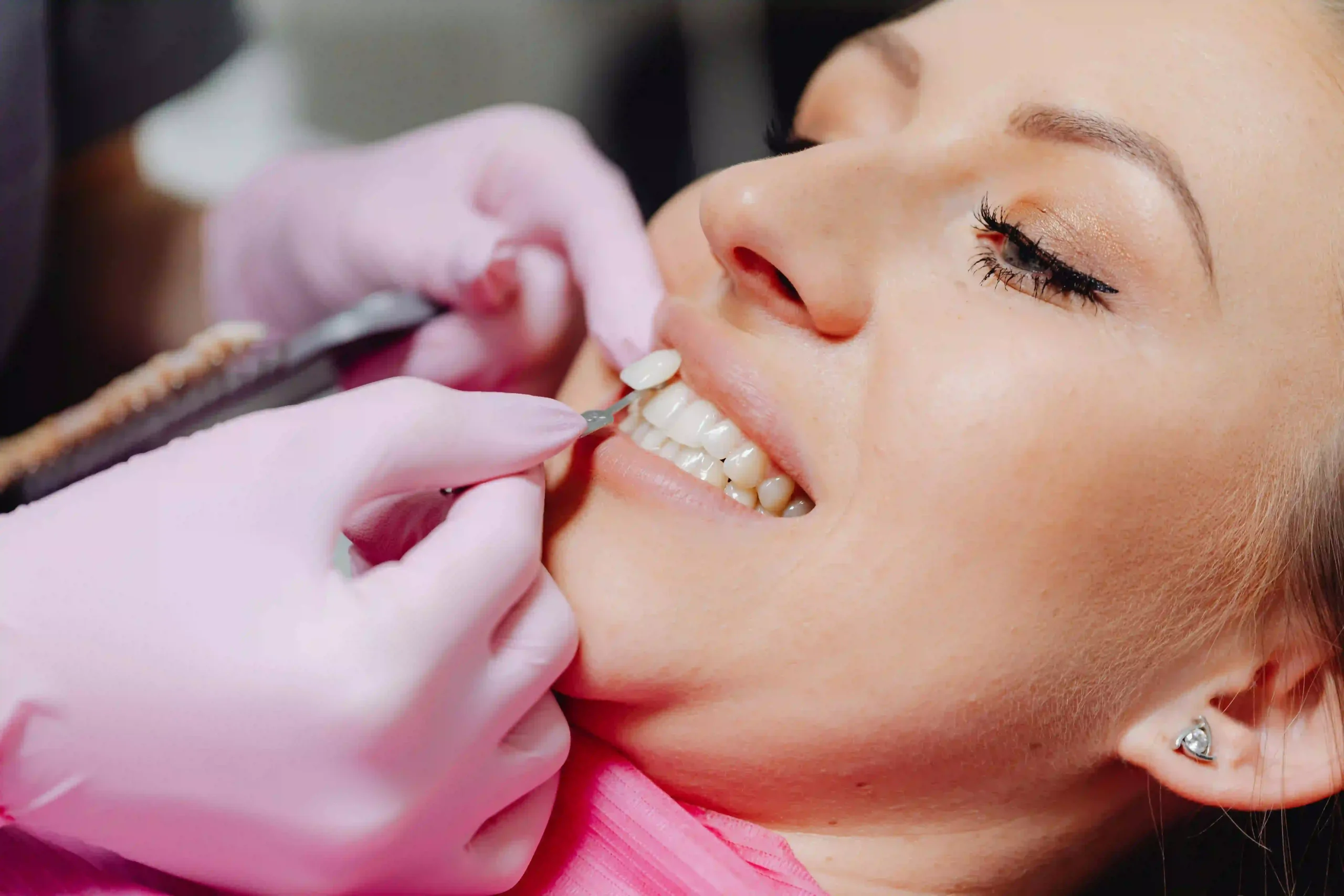
A smile can look brighter and more balanced without making every tooth identical. Choosing veneers starts with deciding what actually needs changing: colour, shape, a chipped edge or tooth position. Sometimes whitening, bonding or orthodontics can achieve the goal with less intervention.
Composite or porcelain for your front teeth
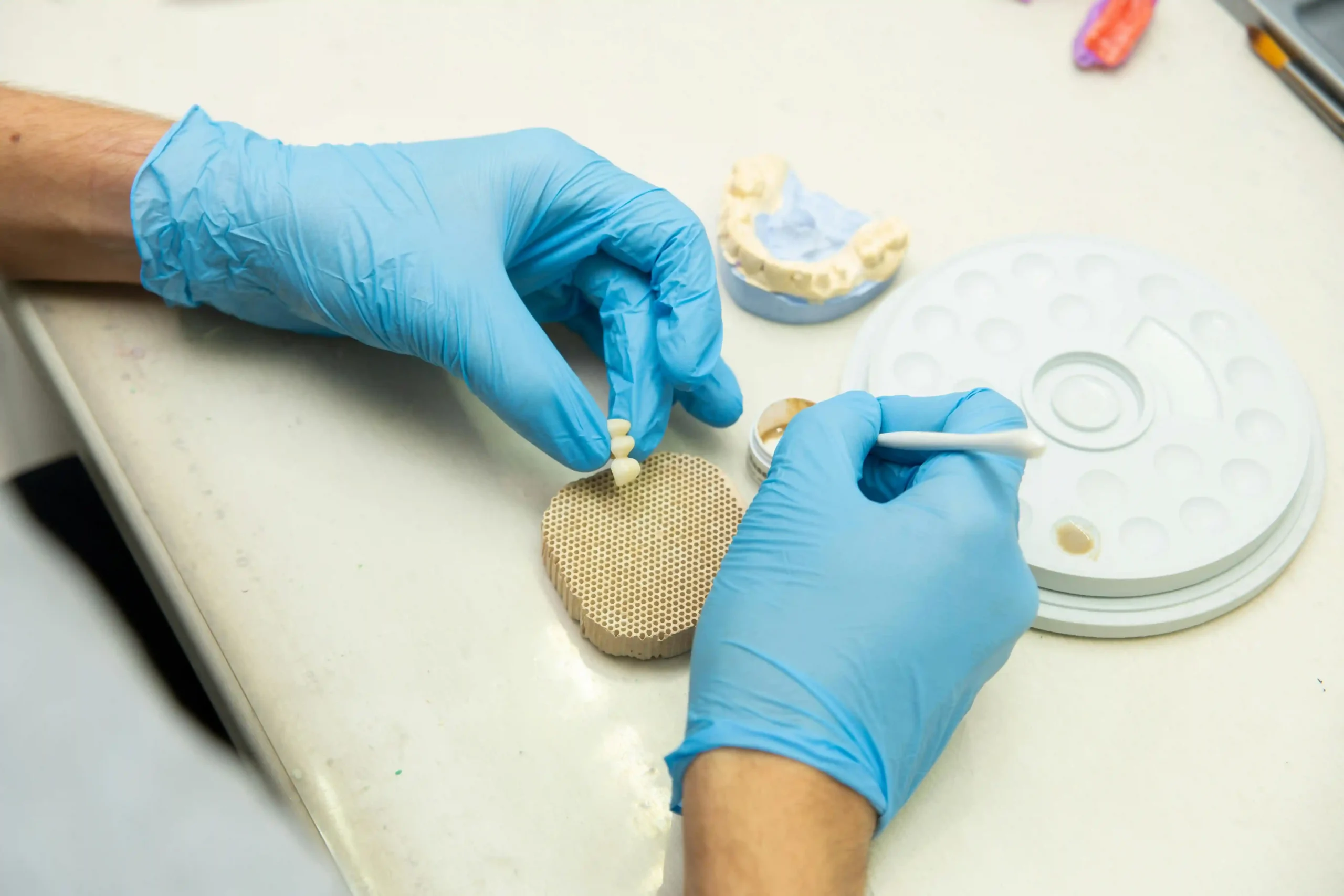
Composite is a tooth-coloured resin that can often be repaired directly. Porcelain veneers are laboratory-made ceramic shells with good colour stability. Emax is a type of glass ceramic, not a separate treatment. Neither material is automatically best. Existing fillings, available enamel, the bite and the desired change determine what can be bonded predictably. Combining composite on one tooth with porcelain on another is possible, but matching translucency, texture and ageing requires careful planning.
What “shaving teeth” really means
Preparing a tooth for a veneer may involve removing a controlled amount of enamel to create room for the restoration. This is not the same as preparing a tooth all the way around for a crown. No-preparation veneers suit selected cases; adding material without enough space can make teeth bulky. Ask to see the proposed shape before irreversible preparation.
Removed enamel does not grow back. Replacement veneers do not automatically require substantial additional reduction each time, but decay, damage or difficulties removing the old restoration can lead to further treatment. A lifetime without maintenance or replacement cannot be promised.
Protecting the teeth underneath
Natural teeth remain underneath veneers and can still develop decay, especially around the margins. A crack also needs a diagnosis: a superficial line, a chipped edge and a deep fracture are different problems. Bonding may be sufficient for some defects; others require more extensive restoration. Veneers do not treat an infected nerve or solve every crack.
Grinding increases mechanical stress on both composite and ceramic. Bite assessment, material selection and, when indicated, a protective splint matter more than choosing a material by name alone.
Veneers after braces or clear aligners
Straightening teeth first may reduce the amount of preparation needed. Veneers can camouflage a small shape discrepancy, but cannot correct a skeletal asymmetry or a major bite problem. Once orthodontic movement is complete, the dentist and orthodontist should coordinate the veneer appointment and retention. Do not stop wearing retainers or force an old retainer over changed teeth.
Making the decision yours
A useful consultation explains alternatives, preparation, expected appearance, limitations, total costs and future maintenance. Veneers are worth considering when the benefit matches your priorities and the biological cost is acceptable—not because everyone else has them.
At CHC Clínica Dental Barcelona, request an assessment of your teeth, gums and bite before deciding on your smile treatment.
Explore our information about dental veneers in Barcelona.
Sources and further reading
https://www.mouthhealthy.org/all-topics-a-z/veneers
https://www.ufsbd.fr/wp-content/uploads/2019/03/fiche-facettes_080219.pdf
https://www.moh.gov.sa/awarenessplateform/oralhealth/pages/veneer.aspx


