
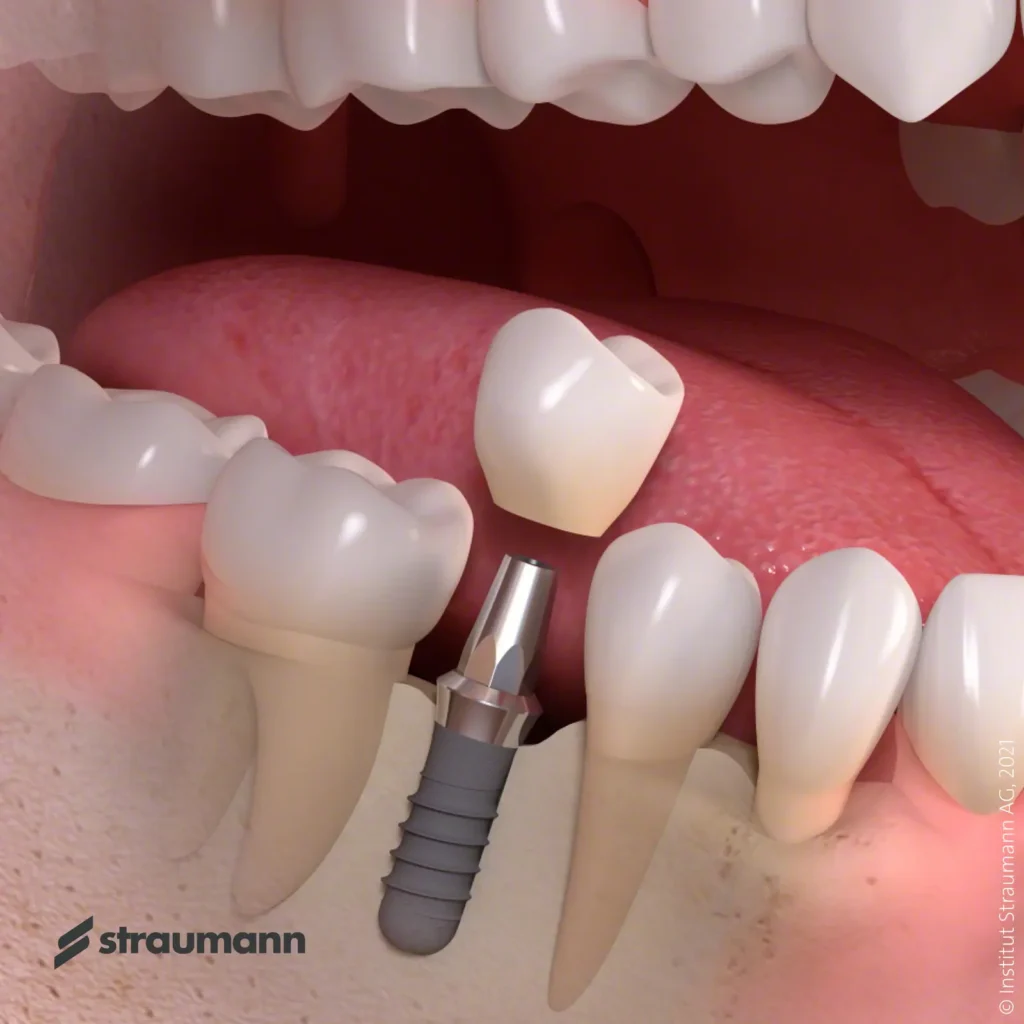
You notice blood next to an implant crown when brushing your teeth. It does not hurt and you can eat normally, so you wonder whether you need an appointment. It is worth having it checked: a lack of pain does not tell you whether the tissues around the implant are healthy.
This article concerns an implant that is already in use. If you have just had surgery, follow your postoperative instructions and contact your dental team about bleeding that does not stop or worries you.
Bleeding does not always mean you will lose the implant
Inflamed gums can bleed. Inflammation of the soft tissue around an implant without additional loss of supporting bone is called peri-implant mucositis. Diagnosis involves more than looking at the colour of the gum: the area needs examination, with assessment of the bone when indicated.
Treatment includes professional cleaning, improvements to daily oral hygiene and checking for anything that makes cleaning difficult. Bleeding that stops for a few days does not prove the condition has resolved; a follow-up appointment checks the response. This approach is described in the SDCEP guidance on peri-implant mucositis.
Peri-implantitis also involves the supporting bone
Peri-implantitis combines inflammation with progressive loss of the bone supporting the implant. Signs can include bleeding, pus or receding gums, and there may be no pain. Waiting until it hurts is therefore not a reliable way to monitor it.
Treatment aims to control inflammation and limit progression. It usually begins with non-surgical measures; depending on the response and the bone defect, surgery or other options may be needed. Not every affected implant can be saved. The SDCEP guidance on peri-implantitis explains why treatment must be tailored to the individual.
What the dentist checks at your appointment
The review goes beyond cleaning the crown. Your dentist examines the surrounding tissues, plaque, bleeding and the depth of the spaces around the implant. Comparing the findings with earlier records and checking the restoration are also important.
Your maintenance schedule depends on your gum health, how easily you can clean the area and your risk factors. X-rays are taken according to clinical need, rather than automatically at every visit. The SDCEP implant-maintenance recommendations explain the reasons for these checks.
Looking after the area while you wait
Avoid scrubbing hard to try to “remove the infection”. Cleaning needs to be effective without injuring the gum. Your dental team can show you which interdental brush or other cleaning aid fits the available space.
A single implant crown and a full set of teeth on implants may need different cleaning techniques. With an implant-supported full-mouth restoration, cleaning underneath the prosthesis matters too. If you cannot reach an area, tell your dentist rather than applying more force. The SDCEP implant oral-hygiene guidance recommends adapting the technique to the restoration.
Antibiotics, regular reviews and gum disease
Antibiotics are not routinely recommended for peri-implant mucositis. Do not take medication left over from another treatment: whether it is appropriate depends on the diagnosis.
Problems can develop even after an implant has worked well for years. Completing treatment does not remove the need for follow-up. Report new changes and keep your agreed maintenance appointments, even when nothing hurts.
Periodontitis affects the supporting tissues of natural teeth; peri-implantitis affects the tissues around implants. Both need professional assessment. Our gum treatment and periodontics section explains how these aspects of care fit together.
An examination to understand the cause
If you notice bleeding around a dental implant, you can contact CHC Clínica Dental at Carrer de la Foneria, 24, Barcelona. Tell us when it started and whether you have noticed any other changes. An examination will help determine the next step.


