
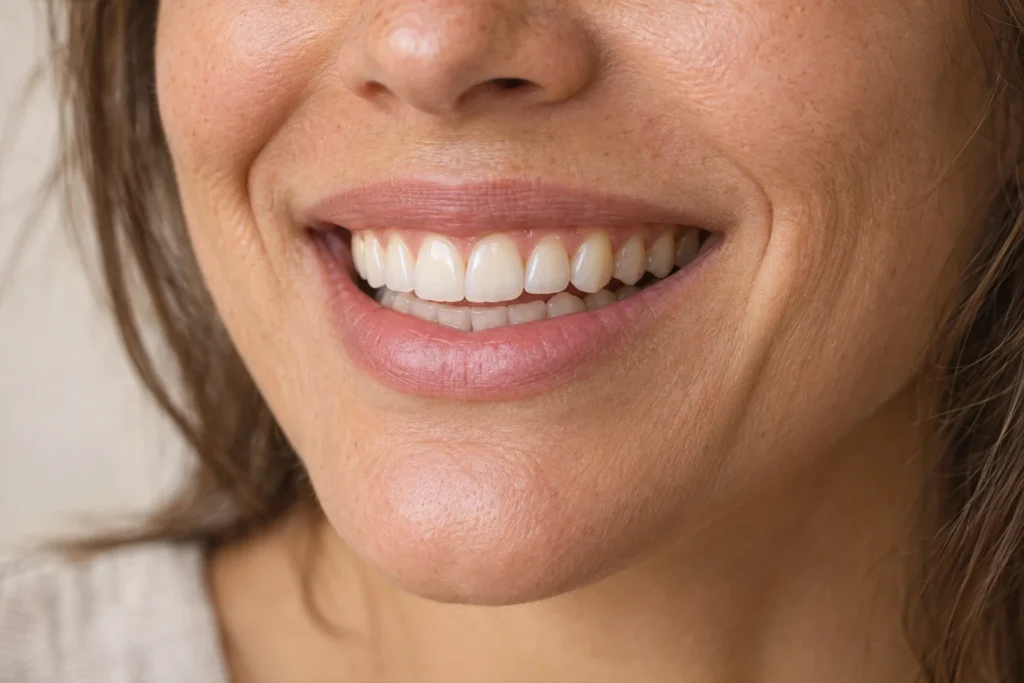
Your braces are finally coming off, or you have reached the end of your clear aligner treatment. Now comes a less visible but important stage: keeping your teeth in their new positions. A dental retainer is not an optional accessory to wear only when you remember where you left it.
Why teeth can move after treatment
Teeth can change position after orthodontic treatment and throughout life. Retainers help limit this movement. Before treatment ends, you should know which retainer to use, when to wear it and when to have it checked. The NHS information reviewed in June 2026 specifically includes retainers in care after braces are removed.
Retainers are also needed after clear aligners
A clear appliance does not remove the risk of teeth moving afterwards. Retention is also part of follow-up after clear aligner treatment.
At CHC, we work with Angel Aligners. Retention is also planned after treatment with fixed braces: it does not depend solely on the brand or appearance of the appliance used.
Fixed or removable retainers: choosing for your situation
A fixed retainer is bonded to the inside surfaces of certain teeth. A removable retainer can be taken out and put back in; some are clear, while others incorporate wire. The choice needs to account for the stability required, maintenance and your ability to follow the wear schedule.
The Cochrane review published in 2023, concerning retention after fixed braces, found low- or very low-certainty evidence for comparisons between different approaches. It does not establish that one system is always better. Its findings should not be applied as though every patient and treatment were the same.
How long to wear your retainer
Retention is usually a long-term commitment. This does not mean everyone should wear a removable retainer for the same number of hours. Your orthodontist should explain your wear schedule and any changes to it. Do not reduce wear on your own simply because your teeth look straight.
The British Orthodontic Society’s retainer leaflet emphasises follow-up and contacting the clinic promptly if a retainer is lost or broken.
Everyday retainer care
Keep a clear removable retainer in its case whenever you are not wearing it. A tissue or napkin does not protect it and makes it easy to throw away by mistake. Clean it according to the instructions for its material; avoid hot water, which can distort it, and ask which cleaning product is suitable.
These precautions are consistent with Dorset County Hospital’s patient information. If the retainer becomes uncomfortable, feels loose or develops sharp edges, arrange a check of its fit.
With a fixed retainer, pay particular attention to cleaning around the wire and its bonding points. Regular dental checks are still necessary: finishing orthodontic treatment does not replace checks for tooth decay and gum problems.
If your retainer breaks, goes missing or no longer fits
If it breaks or you lose it, contact the clinic as soon as possible rather than waiting for your next scheduled appointment. Explain what happened and keep any pieces you have to show the dentist.
If it no longer fits as before, it needs assessing. Do not assume buying an identical replacement is enough: the fit and the current position of your teeth need checking before deciding what to do next.
A fixed retainer also needs cleaning and checks, even though you do not have to remember to put it in. If you notice a loose bonding point or a tooth changing position, contact the clinic.
Leave with clear instructions
Before treatment finishes, write down which retainer you have, your wear schedule and how to contact the clinic if a problem arises. If you need a retainer check in Barcelona, you can contact CHC Clínica Dental. Our orthodontics section explains the journey from assessment to follow-up.


