You want to improve your smile, but something is holding you back: “Will my teeth be filed down? Could they ever be the same as before?” These are important questions. Veneers do not require the same preparation in every case, and preserving healthy tooth tissue should be part of the decision from the outset.
In some situations, material can be added with minimal preparation; in others, enamel needs to be removed. The difference is not decided by a reference photograph or a brand of veneers: it depends on your teeth, their position and the change you want.
A veneer is not a crown
A veneer mainly covers the visible surface of a tooth. A crown covers it more extensively and has different indications, for example when a tooth needs a larger reconstruction. That is why images of heavily reduced teeth on social media do not represent every veneer treatment.
If you are concerned about how much tooth tissue will be preserved, ask for an explanation of the specific procedure. You can compare the two options in our article about the differences between veneers and crowns, without assuming that either is the answer for everyone.
Why does enamel sometimes need to be removed?
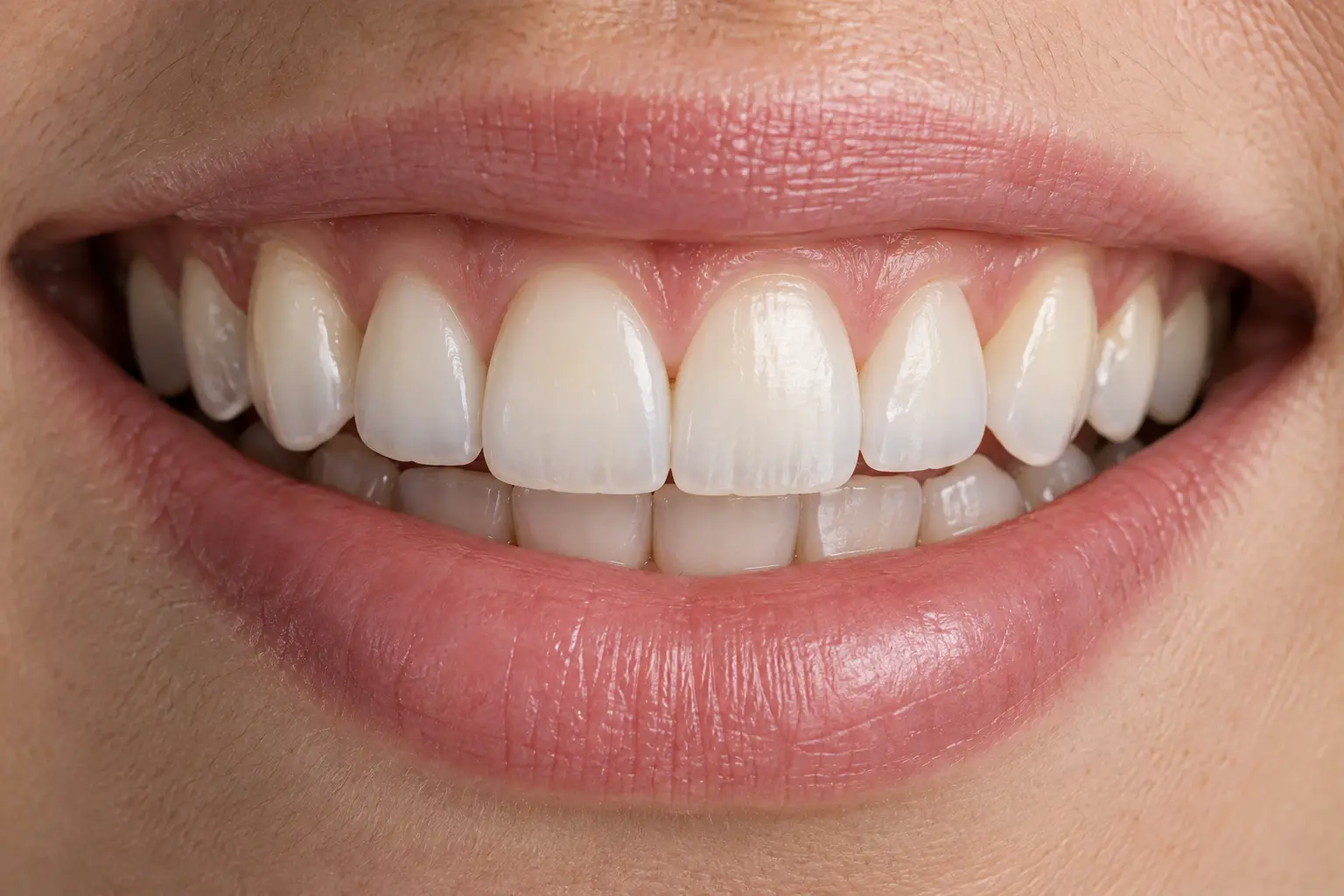
A veneer needs space to shape the tooth without making it too bulky. If a tooth already projects forwards, adding a layer without preparing it may make it look even more prominent. The colour to be masked and contact with the teeth in the opposing arch also need to be considered.
Preparation means removing a planned amount of tissue, not filing teeth as a matter of routine. Enamel that is removed does not grow back. The American Dental Association points out that this treatment should be understood as an irreversible decision when it involves removing enamel.
Are no-prep veneers an option?
Yes, minimal-preparation and no-prep options exist for selected cases. For example, there may be room to add volume to small teeth or close certain gaps. But “no-prep” does not mean “suitable for everyone”, nor does it guarantee that removing the restoration in the future will require no work on the tooth.
Cleveland Clinic’s clinical information distinguishes these options and explains that their suitability requires assessment. A useful question is: “Do we have enough space to achieve the change I want without making my teeth look thick?”
Be cautious about choosing a technique simply because of its name. Conservative treatment may also mean having orthodontics first, whitening the teeth or repairing only an edge. Sometimes the best way to preserve a tooth is to change the order of the treatment plan.
What needs checking before discussing colour?
The health of the teeth and gums
Tooth decay and gum problems need to be treated first. A veneer changes appearance, but it does not cure what is underneath. Bleeding, persistent sensitivity, a fracture or a large old restoration needs investigation and a reassessment of whether a veneer is still appropriate.
Your bite and any clenching habit
It is not enough for a smile to look good in a photograph. The way the teeth meet when you close your mouth and move your jaw needs checking. Bruxism or certain bite patterns can increase the risk of fracture or make another approach advisable. If a protective splint is indicated, it is part of the plan; it does not make veneers unbreakable.
The change you actually want
Is it the colour of your whole smile or just one tooth that bothers you? A chipped edge, a gap or rotated teeth? Try to describe it in your own words. That conversation helps avoid treating more teeth than necessary and distinguishes a problem of shape from one of position.
Ceramic or composite?
Ceramic veneers are custom-made and bonded to the tooth. Composite veneers use a tooth-coloured resin that can be shaped directly. Ceramic generally retains its colour better; composite allows direct repairs in many situations but may need more maintenance because of wear or changes in appearance.
The choice should not be based only on a comparison of materials. The amount of enamel, the extent of the repair and the bite all matter. The Oral Health Foundation, in its information updated in April 2026, explains the indications and care of both options. Neither lasts forever or rules out the need for repairs.
Can I try out how my smile will look?
Planning may include photographs, a scan and a proposed shape. In some treatments, a trial of the proposed volume can be carried out in the mouth, called a mock-up. It provides an opportunity to discuss tooth length and how the smile feels before completing treatment.
A digital simulation helps explain a proposal, but it is not a promise of the result. A trial also does not reproduce the final ceramic exactly. It is useful to ask what you are assessing: shape, volume, approximate colour or how it feels when speaking. This helps keep expectations clear.
The process, step by step
1. Assess and compare alternatives
The teeth, gums and bite are assessed. You can bring photographs of smiles you like, but also explain what you do not want: teeth that are too white, too large or all identical. The aim is to agree on a change that makes sense for your mouth.
2. Define the shape and necessary preparation
Before any procedure, ask which teeth will be treated and which will remain untouched. If enamel needs to be removed, ask why it is necessary in each area and which more conservative alternatives have been considered. Preparation does not have to be identical on every tooth.
3. Prepare and record the teeth
For ceramic veneers, the agreed preparation is carried out and a record is taken for their manufacture. This may involve an impression or a scan. Depending on the case, temporary veneers are placed while the final ones are made. With direct composite, the material is shaped on the tooth and the sequence is different.
4. Check before bonding
Fit, shape and colour are checked, and any necessary changes are made. This is a time to express doubts, not to assume you can no longer say anything. The Bupa Dental Care guide to the procedure describes the checks before final bonding.
5. Check the bite and learn how to care for the veneers
After placement, the way the teeth come together is checked. There may be an adjustment period or sensitivity; if one tooth makes contact before the others, hurts persistently or feels loose, it needs to be reviewed. Check-ups help detect small problems before they become a larger repair.
When might another treatment be better?
If the main concern is colour, ask about whitening. If it is position, ask about orthodontics. If only a small area has lost its shape, a localised repair may be enough. And if the tooth is badly weakened, it may need a restoration other than a veneer.
Whitening acts on natural teeth; it does not change the colour of veneers and crowns in the same way. If both treatments are being considered, their order needs to be planned. The Oral Health Foundation explains these limitations of whitening.
Frequently asked questions
Can I later remove the veneers and return to how my teeth were before?
You should not count on this if enamel has been removed. Replacing a veneer does not return the tooth to its original state. Even with no-prep techniques, it is important to discuss in advance how removal or replacement would be managed.
Can veneers be placed on just one or two teeth?
It may be possible. The number depends on the problem and harmony with the neighbouring teeth. You do not need to accept a fixed number without understanding why it is proposed. Matching a single tooth also requires careful planning.
Can they stain or break?
Yes. Materials behave differently, and the edges or neighbouring tooth may also change over time. Do not use your teeth to open packaging or bite hard objects. A damaged veneer needs assessment to decide whether it should be repaired or replaced.
Can I still get tooth decay with veneers?
Yes. The remaining tooth still needs brushing with fluoride toothpaste and cleaning between the teeth. A veneer does not protect the whole tooth or replace check-ups.
Assessing your smile at CHC
At CHC Clínica Dental, we can assess your dental veneer options and compare them with other ways of improving your smile. The conversation begins with what you would like to change and what should be preserved. You do not need to choose a material or number of veneers before your visit.
Contact us on WhatsApp to request an assessment at our Barcelona clinic. We will help you understand the steps your case might involve.
Clinical sources
American Dental Association, Oral Health Foundation, Cleveland Clinic and Bupa Dental Care, linked in the relevant sections. Consulted on 13 September 2026. Information to help guide your questions; treatment suitability requires an examination.


