People who want to improve their smile often arrive with a clear idea: “I want veneers” or “I think I need crowns”. Yet these restorations do different jobs. Choosing well is not about selecting whichever sounds more attractive, but resolving the problem while preserving as much healthy tooth as possible.
The answer should never come from an isolated photograph. Choosing between veneers and crowns requires assessment of the remaining tooth structure, available enamel, decay or cracks, the bite, the gums and the actual treatment goal.
The main difference: how much of the tooth each restoration covers
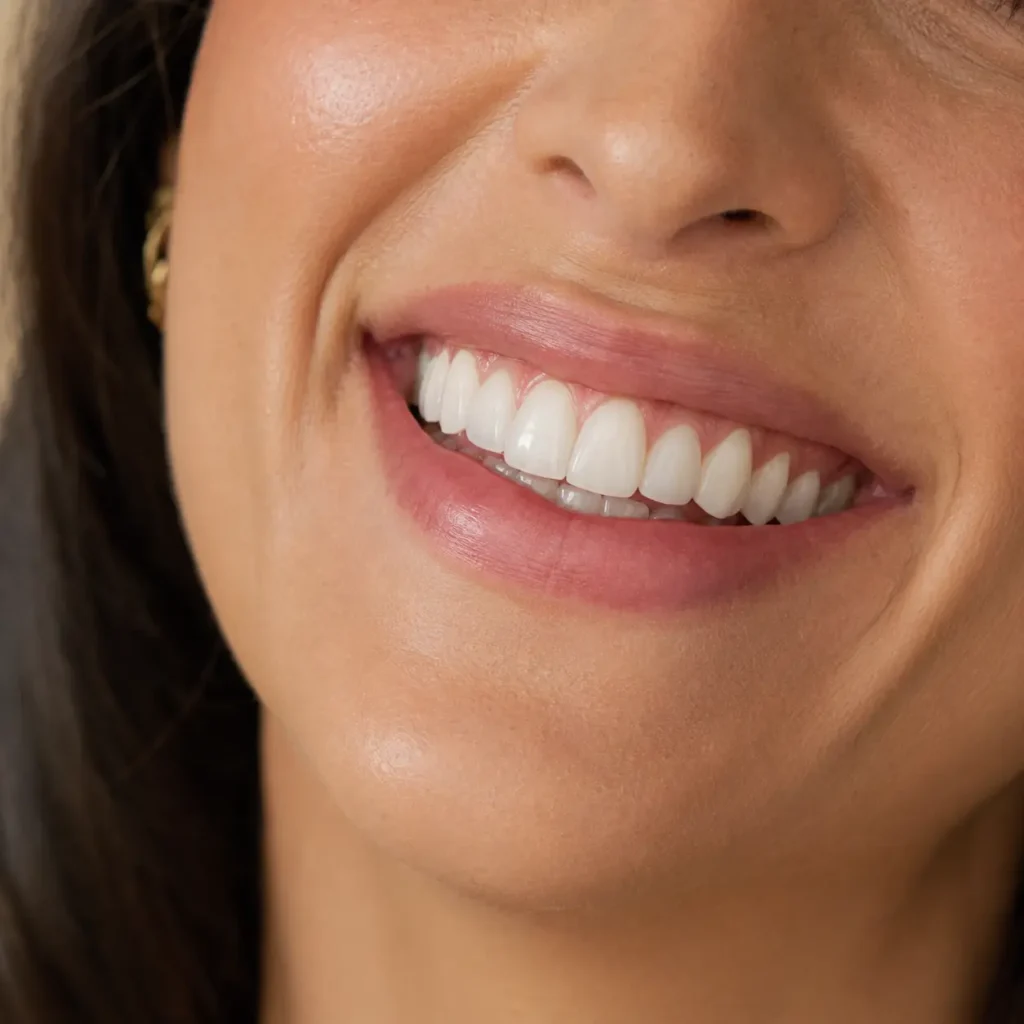
A dental veneer is a thin layer bonded mainly to the visible surface of a tooth. It is primarily used to change colour, shape, certain proportions or small defects in front teeth. Depending on the case and material, minimal enamel preparation may be needed; in other cases, preparation may be more extensive. That is why “no-prep veneers” cannot be promised to everyone.
A dental crown, by contrast, covers the tooth much more extensively. It may be indicated when substantial structure has been lost through decay, fractures, wear or previous restorations, and the tooth needs its shape, function and strength restored. Placing it requires preparation around the tooth.
Put simply, a veneer usually addresses a problem on the visible surface of a tooth that retains adequate structure; a crown is considered when more complete reconstruction is needed. They are not two versions of the same treatment.
When might a veneer make sense?
Dental veneers may form part of a conservative plan when teeth are reasonably healthy and the aim is to address issues such as:
- discolouration that whitening does not resolve satisfactorily;
- fractured or worn edges;
- differences in tooth shape or size;
- small spaces between teeth;
- cosmetic enamel defects.
A thin veneer is not necessarily suitable for every tooth. Limited healthy structure, a large restoration, a crack, active decay or excessive biting forces may call for a different plan. The quantity and quality of enamel available for bonding also matter.
When might a crown be more suitable?
A crown may be needed when the problem extends beyond the visible surface. Examples include substantial tissue loss, a large fracture or extensive restorations that compromise strength. Some root-treated teeth may also need a crown, but not automatically: the decision depends on the tooth, its remaining structure and the forces acting on it.
A crown should not be used as a “thicker veneer”. If a less invasive approach can treat the tooth predictably, it deserves consideration first. Equally, trying to restore a severely weakened tooth with a veneer may be insufficient.
Appearance is not the only consideration
Two people may request the same smile change and need completely different plans. Several factors should be reviewed before deciding.
1. How much healthy tooth remains
This is one of the most important factors. The more structure is preserved, the more reason there is to investigate bonded, minimally invasive options. A heavily restored or damaged tooth may need greater coverage.
2. Gum health
Inflammation, bleeding or active periodontal disease should be diagnosed and controlled before definitive cosmetic treatment begins. The margin of a veneer or crown sits alongside the gum; if this foundation is unhealthy, the result may be less stable and harder to maintain.
3. The bite and tooth grinding
Restorations do not work in isolation. The dentist must check how teeth meet when you close and move your jaw. Grinding or excessive loading may require changes to the design and individually assessed protective measures.
4. Tooth position
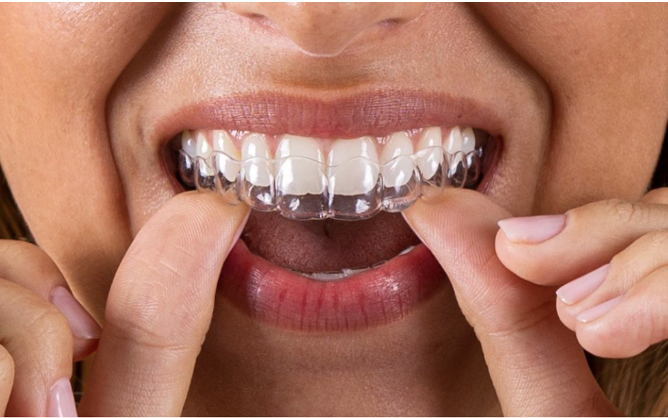
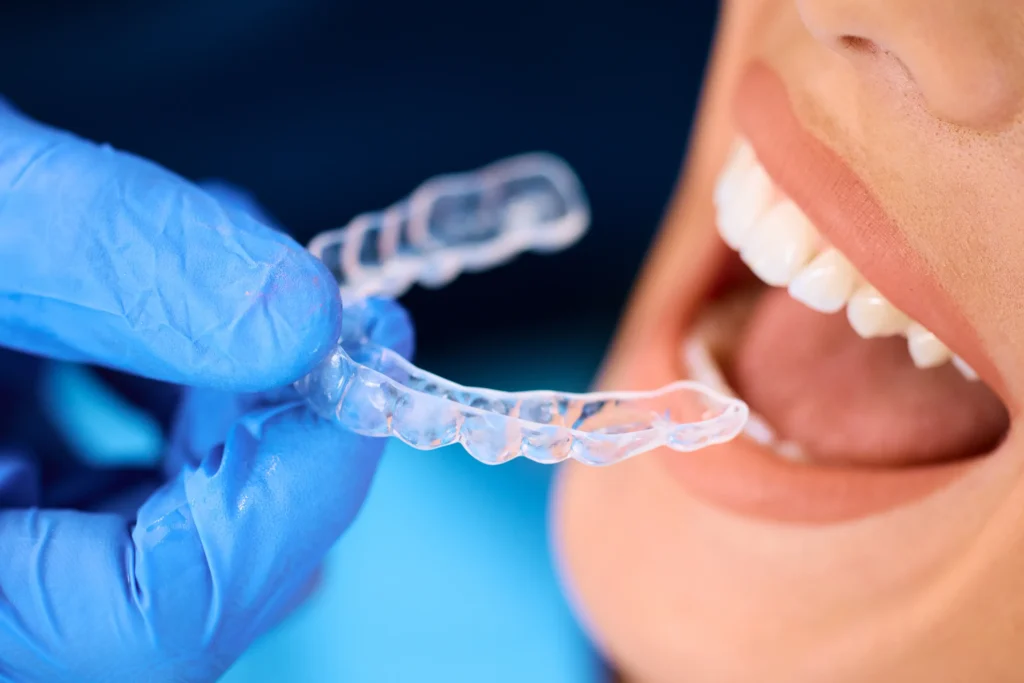
A veneer can disguise certain minor irregularities, but it does not move the tooth or correct the root position. With crowding, rotations or bite problems, clear aligners or fixed braces may be more conservative, either alone or before restorative treatment.
5. The mouth as a whole
When several teeth are worn, missing or heavily restored, or the bite is problematic, deciding tooth by tooth without an overall plan can create inconsistencies. In these cases, full-mouth rehabilitation is assessed. It can combine different solutions and preserve teeth with a reasonable prognosis.
How is the decision made at your appointment?
The first step is to listen to your concerns and the change you hope for. This is followed by a clinical examination of teeth, gums and the bite. X-rays, photographs, scans or other investigations are prescribed according to the case; not every patient needs exactly the same assessment.
The alternatives are then compared. Sometimes a veneer is the best solution; sometimes a crown, partial restoration, composite bonding, whitening or orthodontics. Not treating a tooth can also be entirely reasonable if the expected benefit does not justify the intervention.
When indicated, an aesthetic try-in or provisional design helps assess proportions, the smile, speech and the bite before the final restorations are made. This stage supports informed decisions but does not replace a clinical diagnosis.
Common mistakes when comparing veneers and crowns
- Choosing from a social-media photograph. It does not show the health of the tooth, root, gum or bite.
- Assuming all veneers are “no-prep”. Preparation depends on position, colour, volume and material.
- Confusing crowns with veneers. A crown involves much greater coverage and preparation.
- Seeking the same design for every tooth. A natural appearance depends on respecting proportions, texture and small differences.
- Ignoring maintenance. Every restoration is affected by hygiene, reviews and daily wear.
Care after treatment
Neither veneers nor crowns last “forever” without maintenance. Their progress depends on the tooth’s initial condition, the material, bonding or cementation, the bite, hygiene and habits.
Daily care includes brushing with fluoride toothpaste and cleaning between teeth. Reviews allow assessment of margins, gums, decay, the bite and signs of wear. If you grind your teeth, the dentist will assess whether a splint is appropriate and how it should be monitored.
Frequently asked questions about veneers and crowns
Does a veneer always remove less tooth?
It usually covers less surface than a crown, but preparation varies. The most conservative option is the one correctly indicated for that particular tooth, not whichever has the less invasive-sounding name.
Is a crown always needed after root canal treatment?
Not always. It depends on the tooth type, remaining structure, cracks and biting forces. The restoration should be selected after considering all these factors.
Can veneers correct crooked teeth?
They can visually alter minor irregularities, but do not change root positions. Where there is crowding or a bite problem, orthodontics should be assessed first.
Can veneers or crowns be fitted when gums are inflamed?
The prudent approach is to diagnose and control inflammation first. Stable gums make it easier to plan margins, maintain hygiene and assess the result accurately.
So which is better: a veneer or a crown?
There is no best option for everyone. Veneers and crowns solve different problems. A sound decision restores appearance and function without removing more tooth structure than necessary.
A personalised decision in Barcelona
If you are considering veneers or crowns and want to know which option fits your case, CHC Clínica Dental Barcelona can assess each tooth and explain the alternatives clearly. You can contact the clinic to request an assessment in Sants.